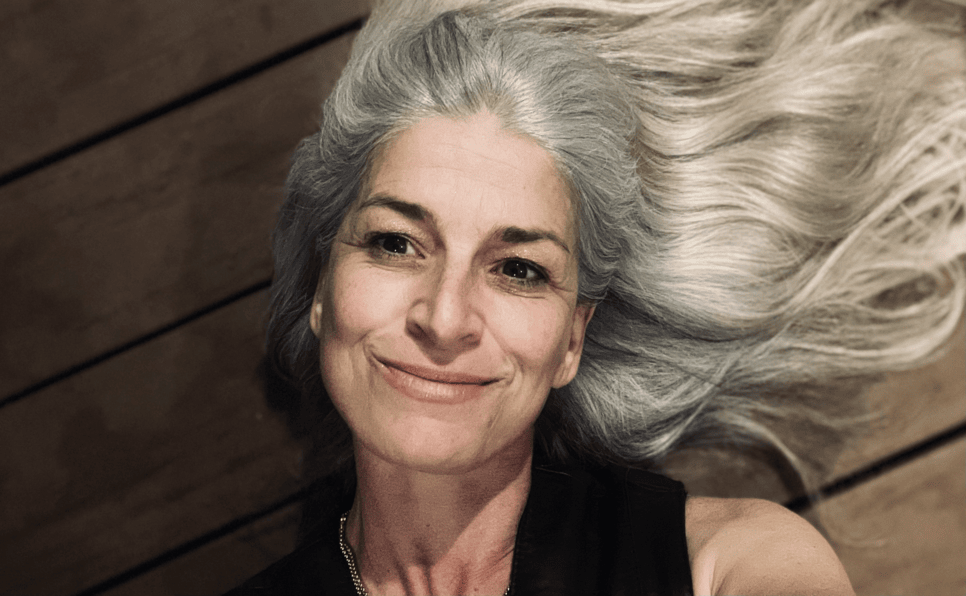
Author Erin O’Malley is one of those people I am immediately drawn to, perhaps because she reminds me of myself: an introverted extrovert, relentlessly ambitious, with impeccable style, and an almost obsessive devotion to living the literary life. We were seated together on the first night of the Sirenland Writers Conference in Positano, Italy, and it took but a few Porn Star Martinis for us to discover that we were literary kindred spirits, despite her being a horsey person, and me, well not. But we were both writing about ghosts! And voicey narrators! And sex! What a revelation. Her publishing journey is fascinating, and her debut, The Brat and the Bullfighter, is a tearjerker in the best possible way: as in, me, a non-horsey person, cried buckets over a horse. I’m so happy to publish my interview with her here on Aspiring Author. Enjoy.
How did you get into writing?
Do diaries and letters count? I moved around a lot as a military brat, so letter writing was a staple. And diaries were an outlet, I suppose. I was a shy kid who loved to read and write. Libraries were always a safe haven. A turning point came during my senior year in college. I took an English course, I can’t even recall the name of it, but we got to write short stories. My first piece was about a crush I’d had freshman year; an unrequited love story. My prof, a coffee-addicted fella whose name I wish I could remember, too, gave me such encouraging feedback. That I do remember. It was the first time I thought, maybe this is something I could actually do. Because as hard as it was, it felt right. I enjoyed the challenge.
Describe your publishing journey. How did you hear about She Writes Press? What made you want to submit to them?
I’d call it bumpy with a side of twists and turns. After finishing my book and querying agents unsuccessfully for close to a year, I decided to apply to She Writes Press, which I’d first heard about at the Kauai Writers Conference back in 2018. Brooke Warner, one of the imprint’s co-founders, gave a talk about hybrid publishing and why she had decided to leave traditional publishing in favor of that model. I was intrigued, especially by the idea of a press by women, for women. A bonus: She Writes Press loves memoir—and you don’t need to be a celebrity. I’d become so accustomed to hearing crickets that when She Writes Press greenlighted my book following its two-tier vetting process, I finally felt seen. Like maybe I hadn’t spent ten years writing a story no one would ever want to read.
Can you explain exactly what a hybrid publisher offers as opposed to a vanity publisher or traditional publisher?
I can’t speak to all hybrid models, but with She Writes Press, you get a higher percentage of royalties than you typically would with a traditional publisher while still getting traditional distribution through Simon & Schuster. Yes, there is a publishing fee, but unlike with a traditional publisher, you also retain control over your marketing and publicity. Spend as much or as little as you want; it’s up to you. But for me, the best and most unexpected advantage has been the community. I was never one for rah-rah sororities in college, but this feels like a different type of sisterhood. It’s this eclectic collection of talented, generous women who’ve shared their time, expertise, and experience, and everyone’s rooting for one another’s success.
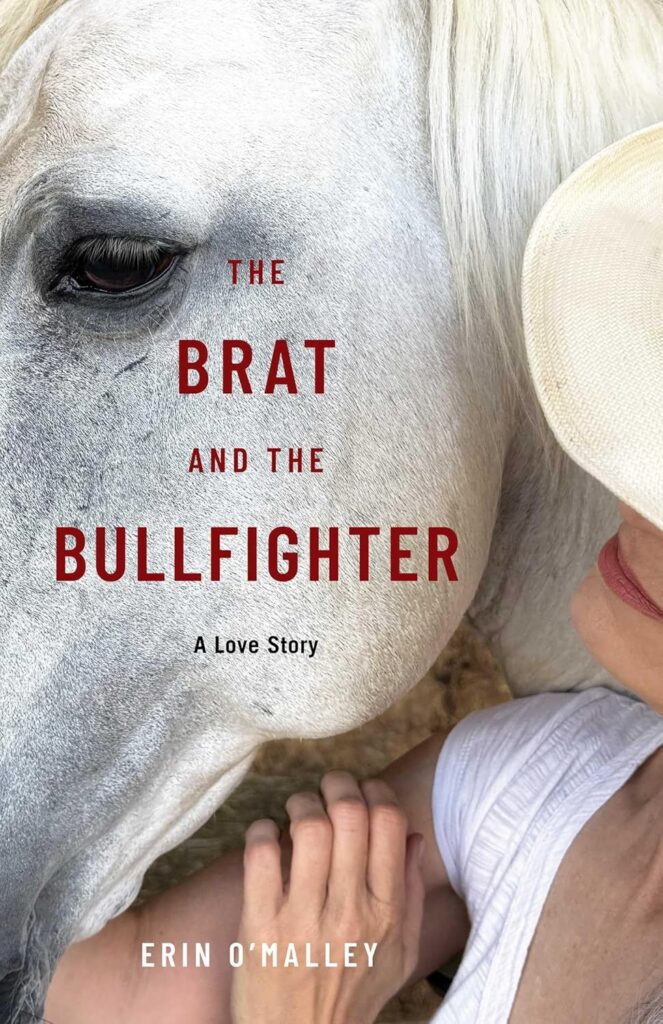
Your mesmerizing debut, The Brat and the Bullfighter, is a dual-perspective hybrid memoir that alternates between your own experiences and the fictionalized voice of your horse, the striking Lusitano stallion, Arty. How did you come up with such a unique concept and structure?
Such kind words, thank you. But I actually can’t take credit for the braided structure. That goes to my developmental editor. I’d originally written nearly the entire book solely from Arty’s perspective with the hope of showing how horses see and experience the world. After reading my pages, she asked me a simple question: “Why do you want to tell this story?” I told her about growing up as an Army brat, moving around without a choice. How I empathize with horses who often have the same experience. They have no warning and no choice in where and when they’re moved. And then this expectation to show up and perform like they’re some kind of machine. After I stepped off my soap box, she just said, “Yeah, you need to write your own story into this.”
I said, “No.”
She said, “Try.”
And so, the braiding began.
You call this a love story. Talk more about that.
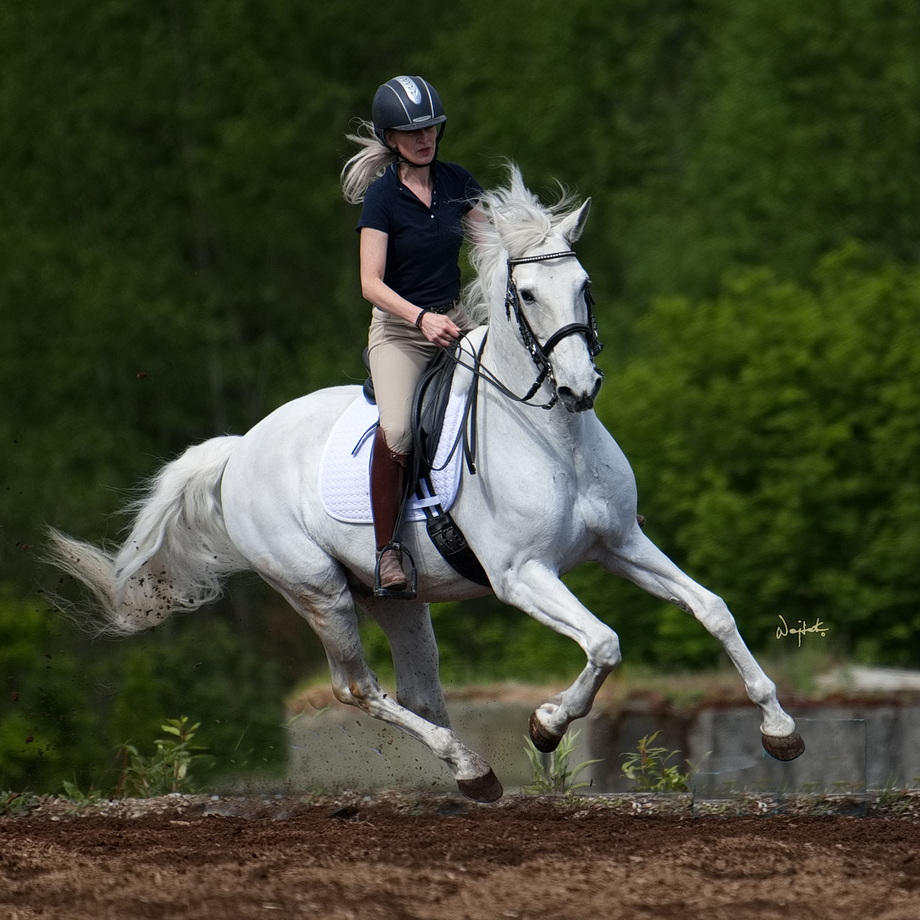
The first person to ever call it a love story was my dad. He’s always been my first beta reader, and when I asked him how he’d describe the book, he said, “Well, it’s a love story.” And he was right. The first time I saw Arty, it was like being struck by lightning. Like this jolt of recognition and attraction and intrigue and intimidation. Love at first sight. But then, when I brought him home and finally had the opportunity to start to unravel the mystery that was him, to understand what he needed, it all felt very much like falling in love. Equal parts exhilarating and terrifying.
In Erin, we have a shy yet resourceful army brat who endures bad jobs, bad relationships, and multiple life moves across oceans. Talk to me about writing humor through turbulence.
I always say, if no one got killed, it might be funny one day. Most of my worst experiences have become comic fodder. I think it’s when you get far enough away from the pain or embarrassment or whatever, you can start to see the absurdity in it. But you also have to be honest about it. And willing to laugh at yourself—your mistakes, your hypocrisy, your terrible decisions. Live, learn, don’t learn. Sometimes humor is survival. Anyone who takes themselves too seriously isn’t funny. Or fun.
In Arty, we have an eloquent voice that navigates different landscapes and languages. He even has his own font! How did you channel writing your horse?
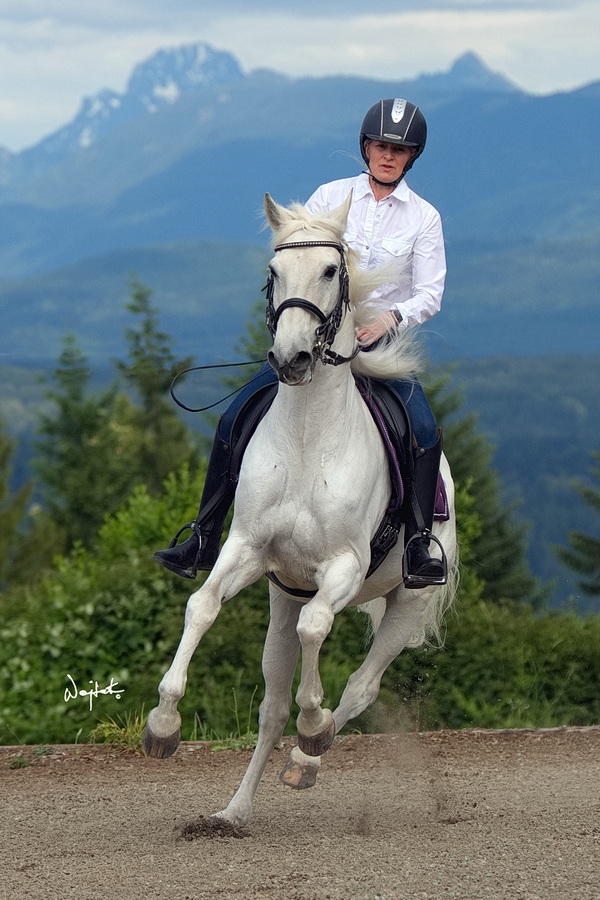
I’ll credit Temple Grandin and her book Animals in Translation for getting me to start looking at the world a little differently. To try to see it the way a horse does. Horses are prey animals. They have eyes on the sides of their heads. They notice the slightest changes in their environment. That’s for survival. That truth was always in the back of my mind. But at the front was really just Arty. I’ve always had this sense he’s from another time. Otherworldly, Old World-y. To look at him—or really, to be looked at by him—you feel his pride. He knows he’s smart and handsome and talented. He’s maybe even a little snobby. Like, “Hey, yeah, check me out. You wanna take my photo? Paint me? I’ll pose. No problem.” But he’s also this incredibly sensitive, almost fragile soul who needs you to tell him he’s done a good job, who needs that reassurance. He’s anything but straightforward, and I tried to be true on the page to the whole of him.
Do you have any examples of books you love about the power of animals to heal?
Is saying The Horse Whisperer too obvious? Or Chosen by a Horse? I’d also say the Art of Racing in the Rain, The Eighty-Dollar Champion, and I adored Lily and the Octopus.
Who are your literary inspirations? Favorite books?
Charles Dickens’ A Christmas Carol is a story I read almost every year. Colson Whitehead is a marvel; his metaphors blow my mind. Erik Larson writes history that reads like a novel. David Sedaris turns turds into comic diamonds. I love memoir as a genre. JR Moehringer’s The Tender Bar is one of my all-time favorites—he had me at “cummerbunds of blubber”. Alice Sebold’s Lucky, Joan Didion’s The Year of Magical Thinking, Julian Barnes’ Levels of Life, Amy Tan’s Where the Past Begins. Hemingway’s A Moveable Feast—because duh, Paris in the twenties. Albert Camus’ Carnets—his musings made me want to write in the middle of the night beneath the stars. All the horse books I read growing up. Everything by Marguerite Henry. C. W. Anderson’s Blaze series. Anna Sewell’s Black Beauty.
What is your daily writing routine?
I wake up at 3 a.m. Not by choice, but an inability to sleep. I’ve always been a bit of an insomniac—menopause has complicated that. Yet I do adore that liminal state between dreaming and waking. I’ll jot down what I think are brilliant ideas into my phone, try to go back to sleep. When I truly wake up around 5 or 6, I’ll check those. If they are even legible, I occasionally find a nugget. Mornings are my favorite. If I get on a roll and the story is really flowing—and I don’t have to stop for the day job—I can write all day. Time passes so quickly. But I need that spark. Some sort of quirky idea to get moving.
How important is it for you to tell the truth in your writing?
Even if a story is imagined, I want it to ring true or possible. That’s why for Arty’s parts, the ones I couldn’t know, I interviewed so many people. I wanted to learn about Brazil, the breeding programs, the auction he came up through, quarantine. It was a bit like unraveling a mystery, piecing together theories on why he might be behaving a certain way, what his training could have been like. So even if I say the book is a work of memory and imagination, it’s still an informed imagination.
What books on writing and publishing do you recommend?
On Writing by Stephen King. Before and After the Book Deal by Courtney Maum—love her honesty about the business side of things. But really, I think the best books on writing are the ones you’ve enjoyed reading. Not that you’ll steal someone’s style or voice, but you can learn how to bend or break the rules.
We met at the incredible Sirenland Writers Conference in Italy. Apart from attending conferences, how else do you maintain a literary community and live a literary lifestyle?
Our Sirenland WhatsApp group chat is a standout. All of us staying in touch, sharing ups and downs, questions, recommendations. My publisher She Writes Press brings together a fantastic community of writers who rally to support one another—whether it’s attending events, writing reviews, or bouncing marketing ideas around. I also have a monthly Zoom meeting with a group from another retreat I attended: Haven, run by Laura Munson in Montana. We do some generative writing, share prompts, catch up. Or I just head to Les Deux Magots for drinks with Ernest, Scott, Jean-Paul, and Simone.
What advice do you wish you’d listened to or ignored?
Don’t quit. All it takes is one yes.
What does success look like to you?
Getting an agent would be nice. But really, when someone tells me something I wrote made them laugh or cry, that’s success.
What keeps you sane?
Horses. Dogs. Friends. Family. Dark chocolate. Okay, and maybe a cold beer on a Friday night.
What are you working on next?
I’m working on two novels: one is a Christmas rom-dram-com set in the Silicon Valley and Paris across two timelines (2009 and 1997). It’s Before Sunset meets A Christmas Carol, with a pinch of The Idea of You. The other is a he said/she said novel I’m co-writing with a friend; it questions how we remember things and ponders paths not chosen—with a little time-travel woven in for good measure.
Will you go down the hybrid publishing route again?
I might; it’s been a great experience. But I’d also love to see if an agent would be interested in the rom-com, which is more commercial.
What one piece of advice would you give to aspiring authors looking to get published?
Take craft and business courses. Check out conferences and retreats. But most of all: write. Complete your manuscript.
About Author Erin O’Malley
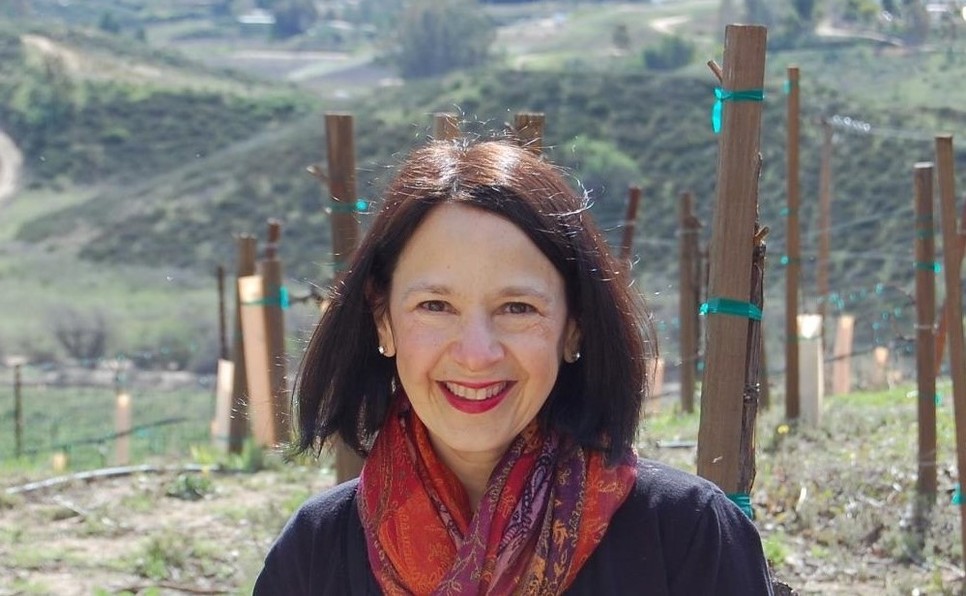
Erin O’Malley is a lifelong horse lover and reluctant extrovert. She began her career in Paris, working for Hearst Publications on titles like Harper’s Bazaar, Marie Claire, Cosmopolitan, and Town & Country, before transitioning into tech, where she focused on marketing and content strategy. She credits her love of telling stories to her upbringing as an Army brat—always moving, ever shy. The Brat and the Bullfighter is her debut, told from two perspectives: a girl and the horse who saves her. She lives near Seattle with her husband, two horses, and three dogs. Connect with her on Substack, Instagram, Facebook, X, and LinkedIn.
Recommended reading
Here at Aspiring Author, we love recommending bestsellers and fawning over hot new releases. On this real time recommended reading list, you will find a list of top rated books on the publishing industry, craft, and other books to help you elevate your writing career.
Think Local Sell Global: How to Build Author Buzz in your Backyard (The Author Visibility Series)
$10.50 (as of September 13, 2026 16:03 GMT +00:00 - More infoProduct prices and availability are accurate as of the date/time indicated and are subject to change. Any price and availability information displayed on [relevant Amazon Site(s), as applicable] at the time of purchase will apply to the purchase of this product.)
The Fear Thesaurus: A Writer's Guide to What Holds Characters Back (Writers Helping Writers Series)
$19.99 (as of September 13, 2026 16:03 GMT +00:00 - More infoProduct prices and availability are accurate as of the date/time indicated and are subject to change. Any price and availability information displayed on [relevant Amazon Site(s), as applicable] at the time of purchase will apply to the purchase of this product.)
The Model Thinker: What You Need to Know to Make Data Work for You
$1.99 (as of September 13, 2026 16:03 GMT +00:00 - More infoProduct prices and availability are accurate as of the date/time indicated and are subject to change. Any price and availability information displayed on [relevant Amazon Site(s), as applicable] at the time of purchase will apply to the purchase of this product.)
Save the Cat! Writes a Novel: The Last Book On Novel Writing You'll Ever Need
$10.81 (as of September 13, 2026 16:03 GMT +00:00 - More infoProduct prices and availability are accurate as of the date/time indicated and are subject to change. Any price and availability information displayed on [relevant Amazon Site(s), as applicable] at the time of purchase will apply to the purchase of this product.)